










Tables
At Vallgatan 12, a curated selection of tables brings material, silhouette, construction and details to the forefront. The range includes Dining Tables, Coffee Tables, side tables, console tables and smaller occasional tables, from pared-back models to more sculptural constructions where the table's form becomes a clear part of the interior.
Dining Tables are designed for meals and social occasions and come in several shapes, with rectangular, oval, round and organic tables being common. Rectangular models are well suited to larger gatherings and narrower rooms, while round and oval tables can create a more cohesive arrangement around the table. The size of a Dining Table should be adapted to the number of seats, the proportions of the room and the space required to move around the furniture. Extendable constructions can change the table's length and provide flexibility between everyday use and larger gatherings.
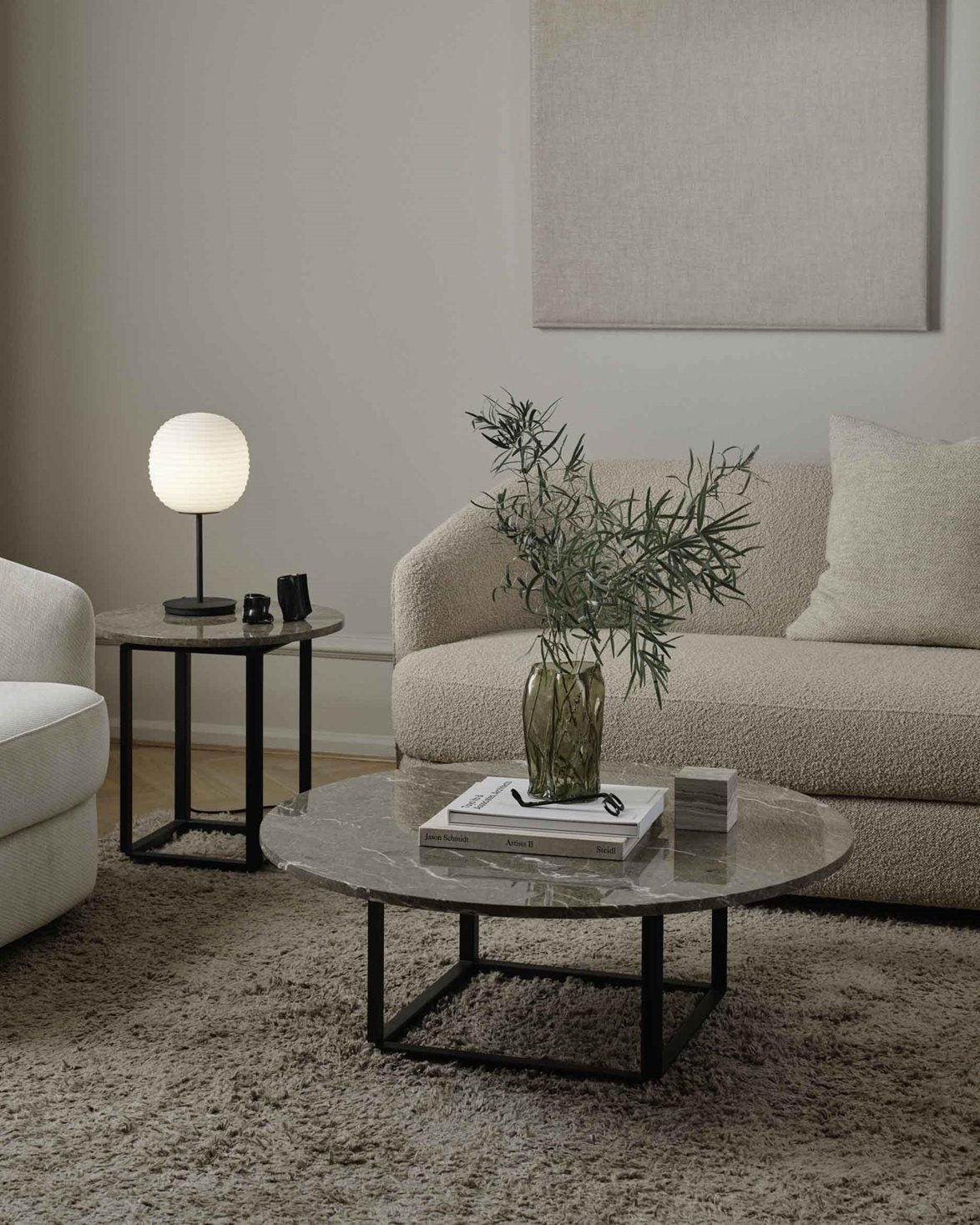
Coffee Tables are usually placed in front of the sofa and serve as a central surface for books, lighting and decorative objects, for example. They come in rectangular, round, oval and organic shapes, as well as in different heights and proportions. Side tables and occasional tables are smaller models placed next to sofas, armchairs or beds and can be used for lighting, smaller objects or other functions. Console tables have a narrower construction and are often used along walls, in hallways or behind sofas, while pedestal tables and column tables are based on a more cohesive base that gives the tabletop a more distinctly sculptural character.
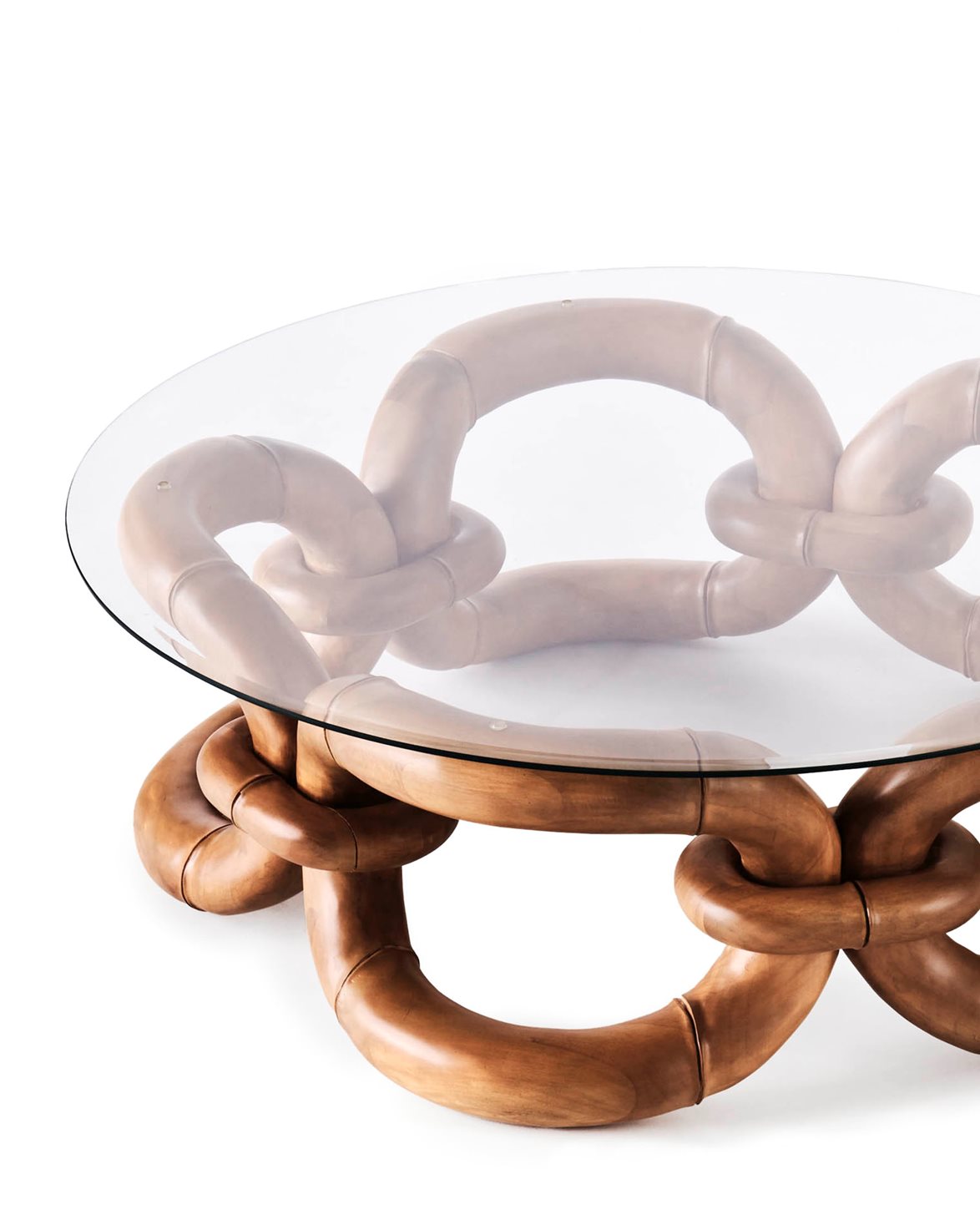
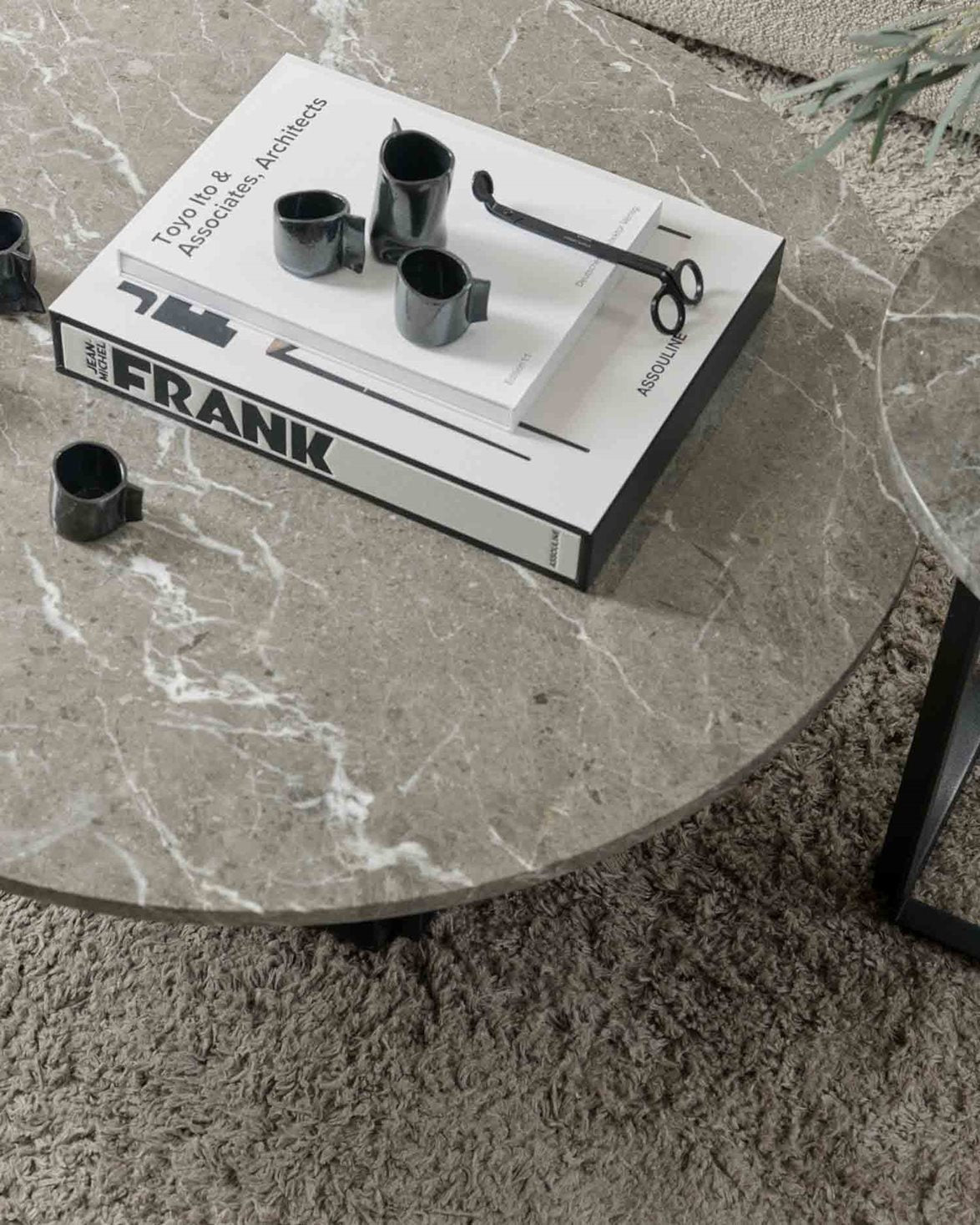
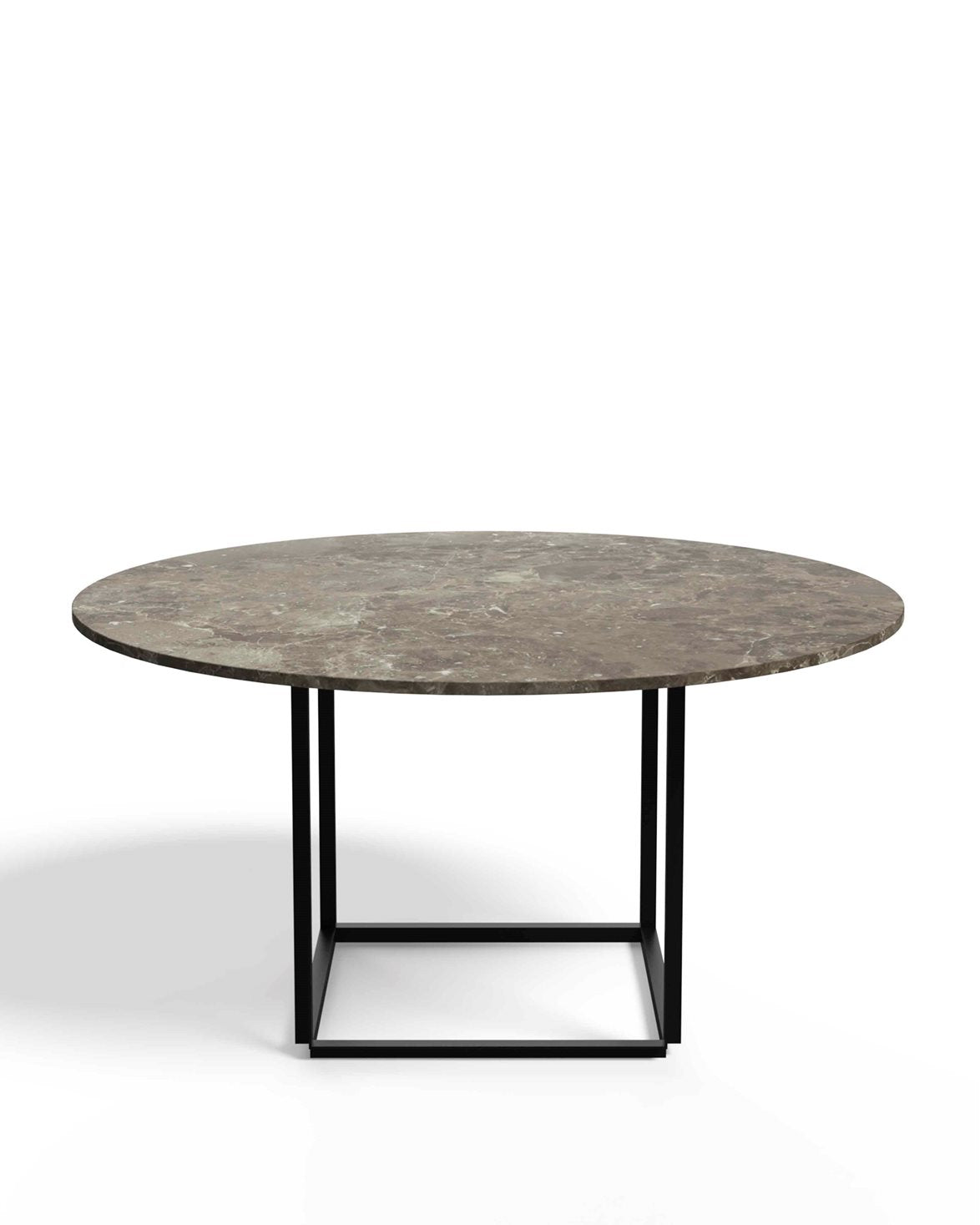
Material and construction have a significant impact on a table's expression, stability and use. Wood is a classic material found in varieties such as oak, walnut, ash and mahogany, with the wood grain, colour and surface treatment becoming a central part of the table's character. Solid wood can be worked, oiled, waxed or lacquered depending on the construction, while veneered surfaces consist of a thin layer of wood applied to a more stable core. Natural stone such as marble, travertine and granite is often used for tabletops and gives each model variation through the stone's natural veining, colour variations and texture. Glass creates a visually lighter construction and can be combined with bases in wood or metal, while metal such as steel, aluminium and brass is used in both load-bearing constructions and more detailed elements.
A table's construction usually consists of a tabletop and a base, where legs, columns or other supporting forms distribute the load towards the floor. The design of the base affects both stability and the amount of legroom beneath the table. Centrally positioned columns can provide greater flexibility around the seating, while four legs create a clear and traditional construction. More sculptural bases can consist of crossed forms, arches, cylinders or geometric volumes in which the supporting construction also becomes a prominent part of the design.
Proportions are crucial to how the table relates to the room's architecture and other furniture. The table's height needs to correspond to its intended use, with Dining Tables usually having a higher seating height in relation to chairs, while Coffee Tables are lower and adapted to the level of sofas and armchairs. The thickness of the tabletop, the dimensions of the legs and the distance between parts of the base also affect the furniture's visual weight. A substantial tabletop can create a more monolithic expression, while a thin top and a more open base create a lighter silhouette.
The table's surface also functions as part of the interior's material palette. A natural stone top can add variation through veining and mineral structures, while wood brings warmth through its natural grain and tactile surface. Metal can have a polished, brushed, matte or patinated finish and change visually depending on the direction of the light. Glass reflects its surroundings and can contribute to a more open visual relationship between the table and the floor. Combinations of materials, such as wood and stone or metal and glass, create contrasts between different surfaces and textures.
The placement of a table affects both its function and the room's overall composition. A Dining Table often serves as the central piece of furniture in a room and needs sufficient space around it for chairs and passage. The size and shape of a Coffee Table should relate to the sofa group and the area to be used around the table. Smaller side tables can be placed close to seating to create practical surfaces, while console tables can follow the room's architectural lines and be used for lighting, art and decorative objects, for example. The table's own form and material can also affect how many objects need to be placed on the surface, with more expressive constructions often functioning as independent objects in the room.
Proper care helps preserve a table's material, surface and construction over time. Wood should be cleaned with a soft, slightly damp cloth and treated according to the recommendations for its surface treatment. Oiled and waxed surfaces may require regular maintenance, while lacquered surfaces generally require less treatment. Natural stone should be protected from prolonged contact with liquids and substances that may cause stains or affect the surface, and cleaning products should be adapted to the type of stone and its surface treatment. Glass should be cleaned with a soft cloth and a suitable cleaning product, while metal should be treated according to its finish and without abrasive products. Liquids should not be left standing on sensitive materials, and hot objects should only be placed on surfaces intended for this purpose.
Vallgatan 12's selection of tables includes models where function, proportion, material and construction work together with the interior. From Dining Tables and Coffee Tables to side tables, console tables and more sculptural models, there are various formats and materials for the home's different environments. The range moves between classic constructions and contemporary interpretations, with wood, natural stone, glass and metal used to create tables with a clear relationship between function, craftsmanship and architectural form.