


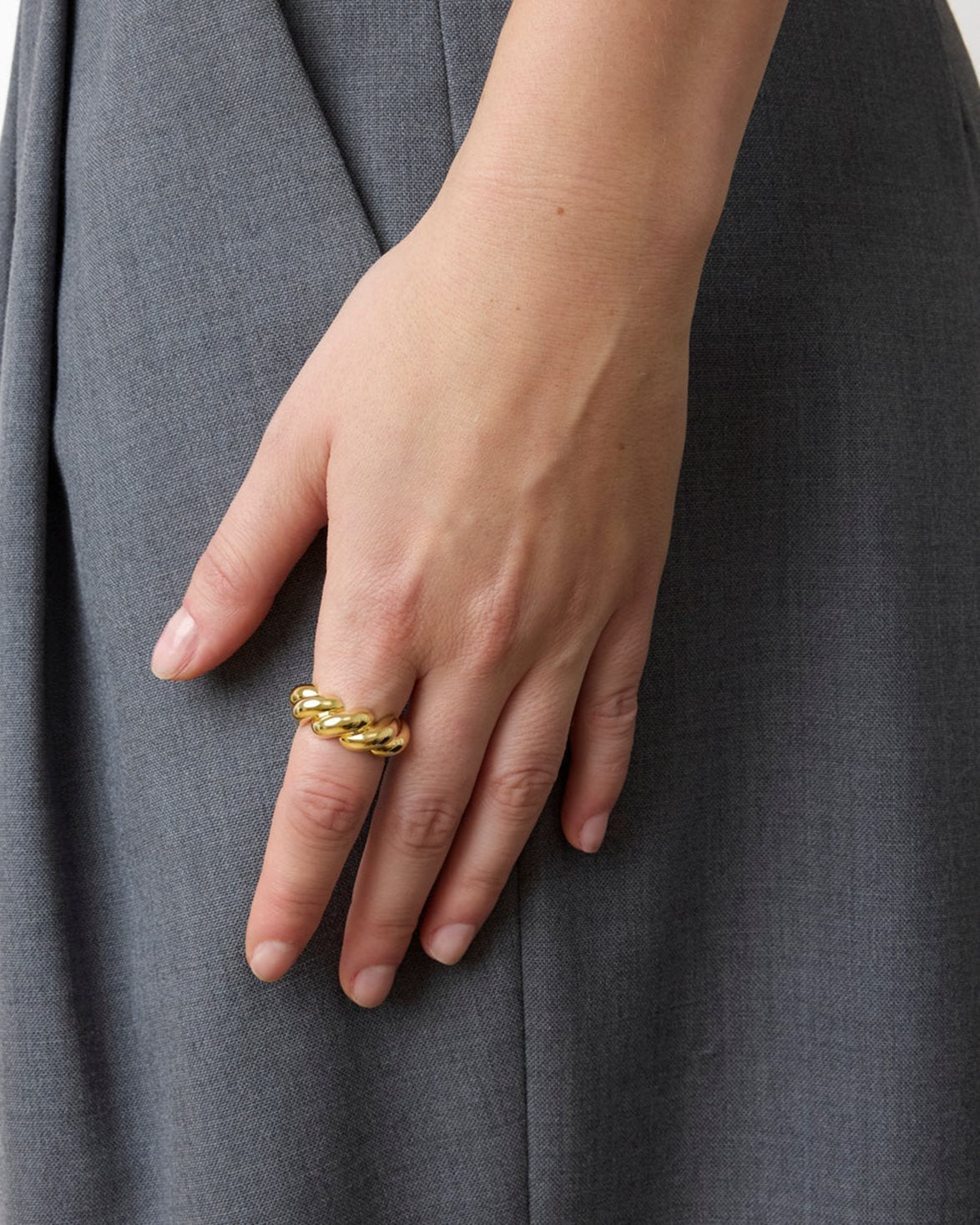


Rings
At Vallgatan 12, you’ll find a carefully curated selection of rings from established and contemporary brands, with styles ranging from thin, minimalist bands and signet rings to sculptural statement rings and stone-set designs. The selection includes different materials, widths, and proportions that can be worn individually, combined on the same hand, or layered.
Rings are worn close to the body, so the right size is essential for both comfort and function. A ring should pass over the knuckle without too much resistance while remaining stable enough not to slip off the finger. The fit is affected by the ring’s inside diameter, circumference, and width. Wider rings may feel tighter than thin styles in the same size because a larger surface rests against the finger. Finger size can also vary throughout the day due to factors such as temperature and activity.
Common styles include classic bands, signet rings, open rings, cocktail rings, and designs with set stones. A band consists of a continuous shank and can range from very thin to wide and sculptural. Traditionally, a signet ring has a broader top that may be smooth, engraved, or decorated. Open rings have a shank that does not fully meet and, in some constructions, may offer some flexibility in fit. Statement and cocktail rings are often characterized by larger proportions, sculptural shapes, or prominent stones.
Metals such as gold and silver are common in ring making. Sterling silver consists of at least 92.5 percent silver and is combined with other metals to increase the material’s hardness. Solid gold is available in different karat levels, with karat indicating the proportion of pure gold in the alloy. Brass, stainless steel, and other metal alloys are also used and may have different surface treatments to alter their color, finish, and surface properties.
Gold-plated rings consist of a base material covered with a layer of gold. The thickness and production method of the plating vary between different pieces of jewelry and affect how the surface changes through use. Gold vermeil is a type of gold plating in which sterling silver is used as the base, and the gold coating must meet specific requirements for thickness and gold content to be called vermeil. Rhodium is also used as a surface treatment, including on some silver jewelry, to create an even surface and reduce direct oxidation of the metal beneath the coating.
Rings may also contain diamonds, gemstones, natural stones, pearls, glass, crystals, and enamel. Natural stones can vary in shade, texture, and inclusions, meaning that each piece may have individual characteristics. Different stones also have varying degrees of hardness and sensitivity to impacts, scratches, chemicals, and temperature changes, which affects how the ring should be worn and cared for.
The construction affects the ring’s shape, durability, and how it sits on the finger. The shank may be rounded, flat, angular, or vary in width, while the inside may be flat or softly rounded for increased comfort. Solid constructions generally have a different weight and stability from hollow styles. On rings with stones, the setting is a central part of the construction, holding the stone in place while affecting how much of the stone is visible.
Stones can be secured using several different setting techniques. A prong setting uses small metal claws to hold the stone in place, while a bezel setting surrounds the edge of the stone with metal. Pavé means that several smaller stones are placed closely together across a surface. The construction of the setting affects both the ring’s appearance and how exposed the stone is to impacts and wear.
Surface treatments and details give rings different character. Polished surfaces reflect more light, while brushed and matte surfaces have a more subdued finish. Hammered, engraved, and sculpted surfaces create additional texture. Rings can also be combined through stacking, with several thin or complementary styles worn together. When combining multiple rings, be aware that metal against metal can cause scratches and gradual wear.
Rings transcend seasons and can be worn year-round. Thin bands and smaller styles work both individually and together with other rings, while wider signet rings and sculptural styles create a more defined look. Since the circumference of the fingers can change slightly with temperature, a ring may feel different during warm and cold periods.
Proper care is important for preserving a ring’s surface, shape, and any settings. Rings should generally be removed when showering, bathing, exercising, cleaning, and during activities where they may be exposed to impacts or chemicals. Perfume, skincare, and cosmetics should be allowed to absorb or dry before putting on the jewelry. Silver can oxidize and darken over time and should be cleaned with products suitable for the material. Gold-plated and plated rings should be cleaned gently with a soft, dry cloth, as friction and frequent contact with water can gradually affect the surface treatment. Rings with stones should be checked regularly to ensure that the setting remains secure and should be stored separately to reduce the risk of scratches.
Vallgatan 12’s selection of rings includes styles in which materials, proportions, and jewelry craftsmanship work together. From minimalist bands and classic signet rings to sculptural shapes and designs with set stones, the selection offers rings with varied constructions, sizes, and details.