




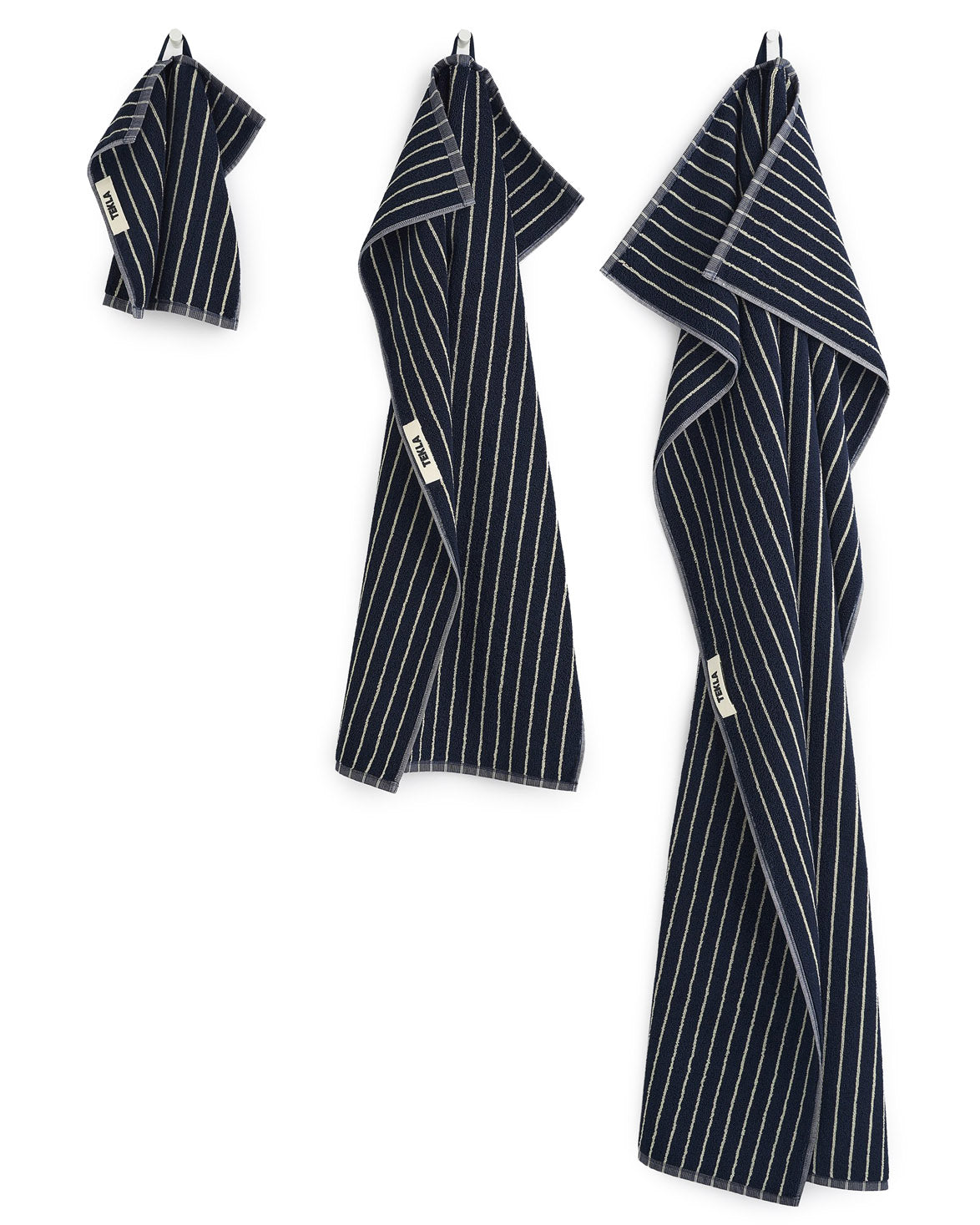


Towels
At Vallgatan 12, a curated selection of Towels designed for bathrooms, showers, baths, and other parts of the daily routine comes together. The range extends from smaller hand towels and classic bath towels to generous bath sheets and lighter woven models, with varying sizes, material, weights per square metre, and textures. In addition to their practical function, Towels form part of the bathroom's textile interior, where weave, proportions, and details contribute to the room as a whole.
The primary function of a towel is to absorb moisture from skin and hands. Absorbency is affected by the fibre material, yarn, weaving technique, and amount of textile per unit of area. A dense and full terry provides a different feel and function from a thinner, plain-weave towel, while the material's thickness also affects how quickly the textile dries between uses.
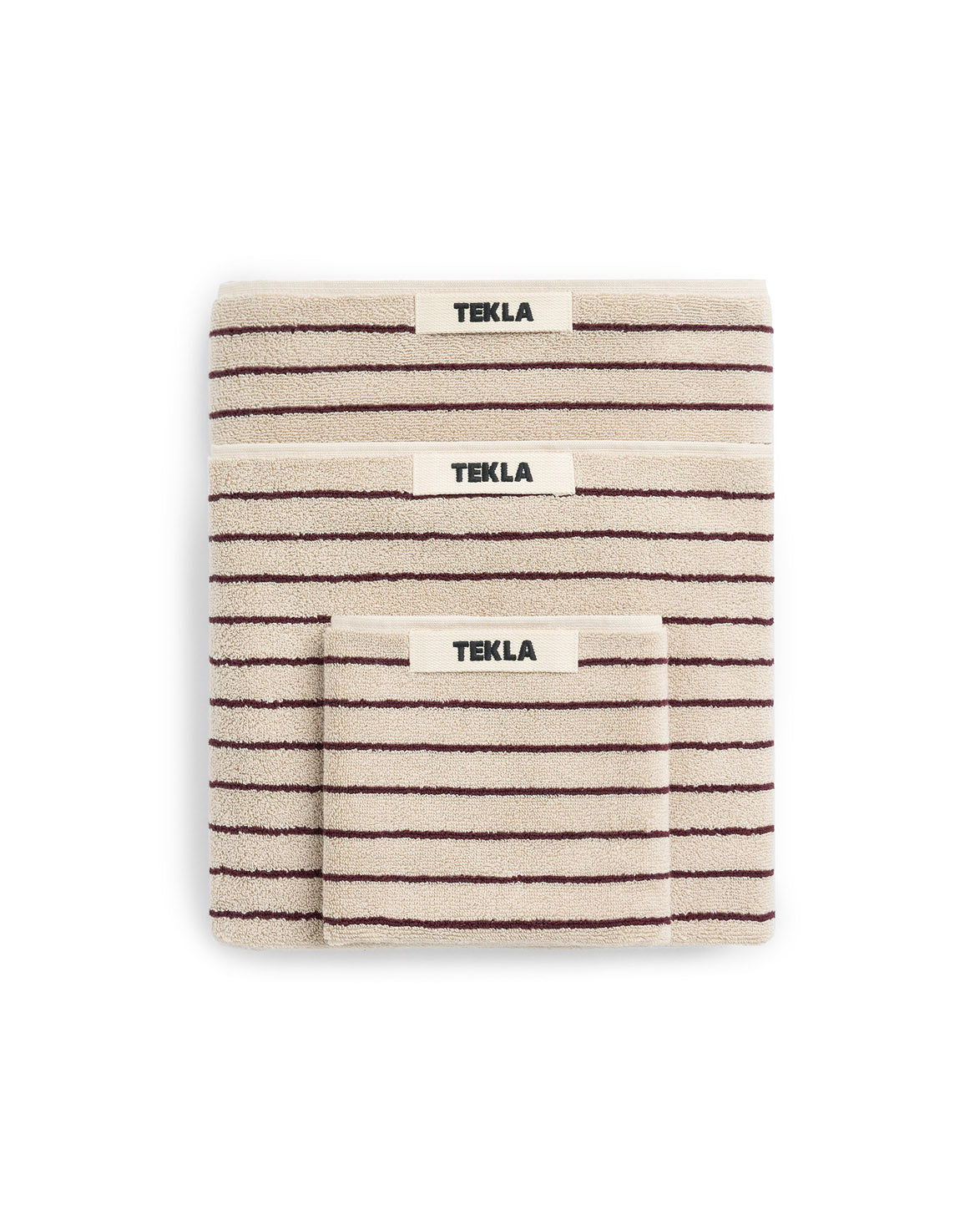
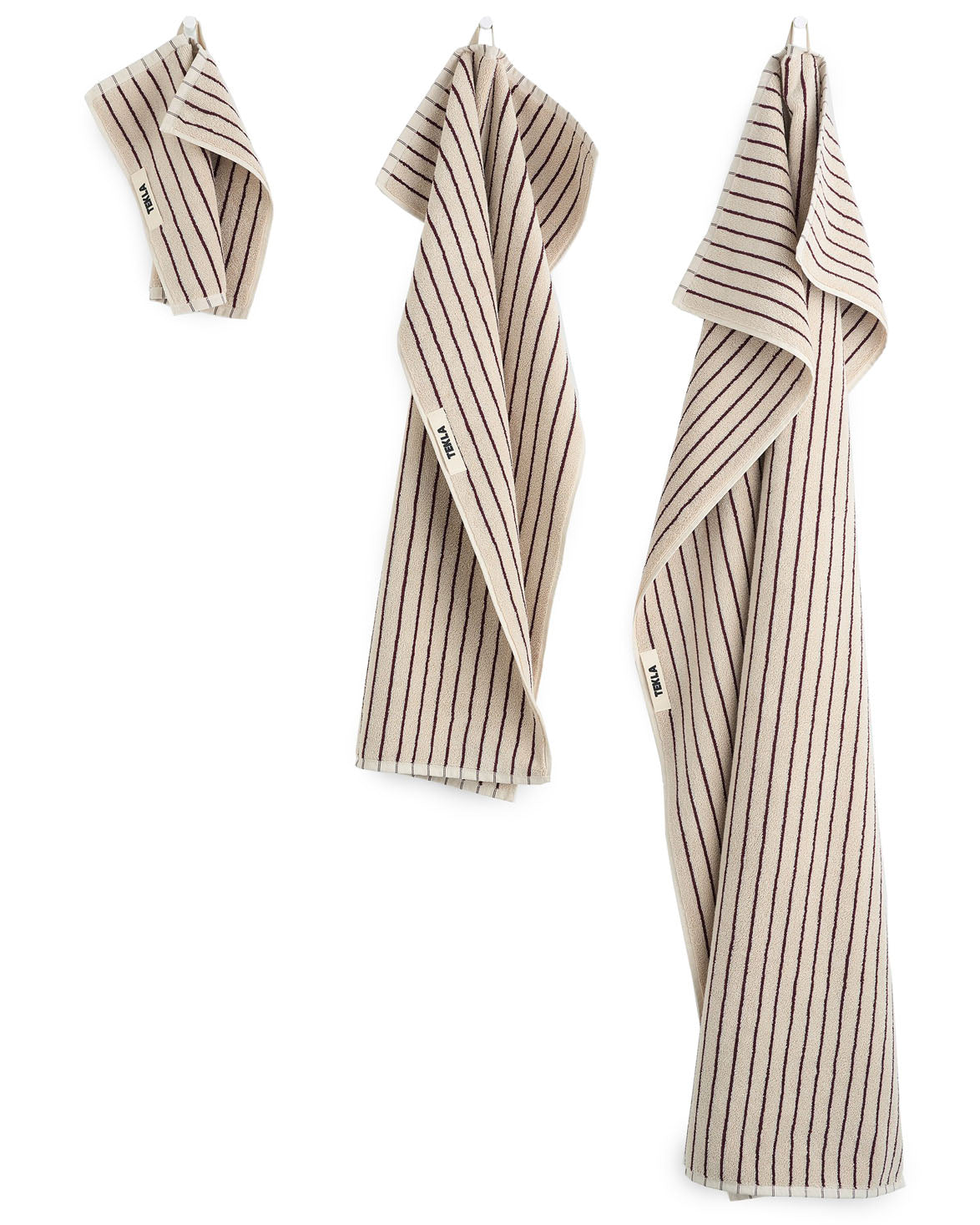
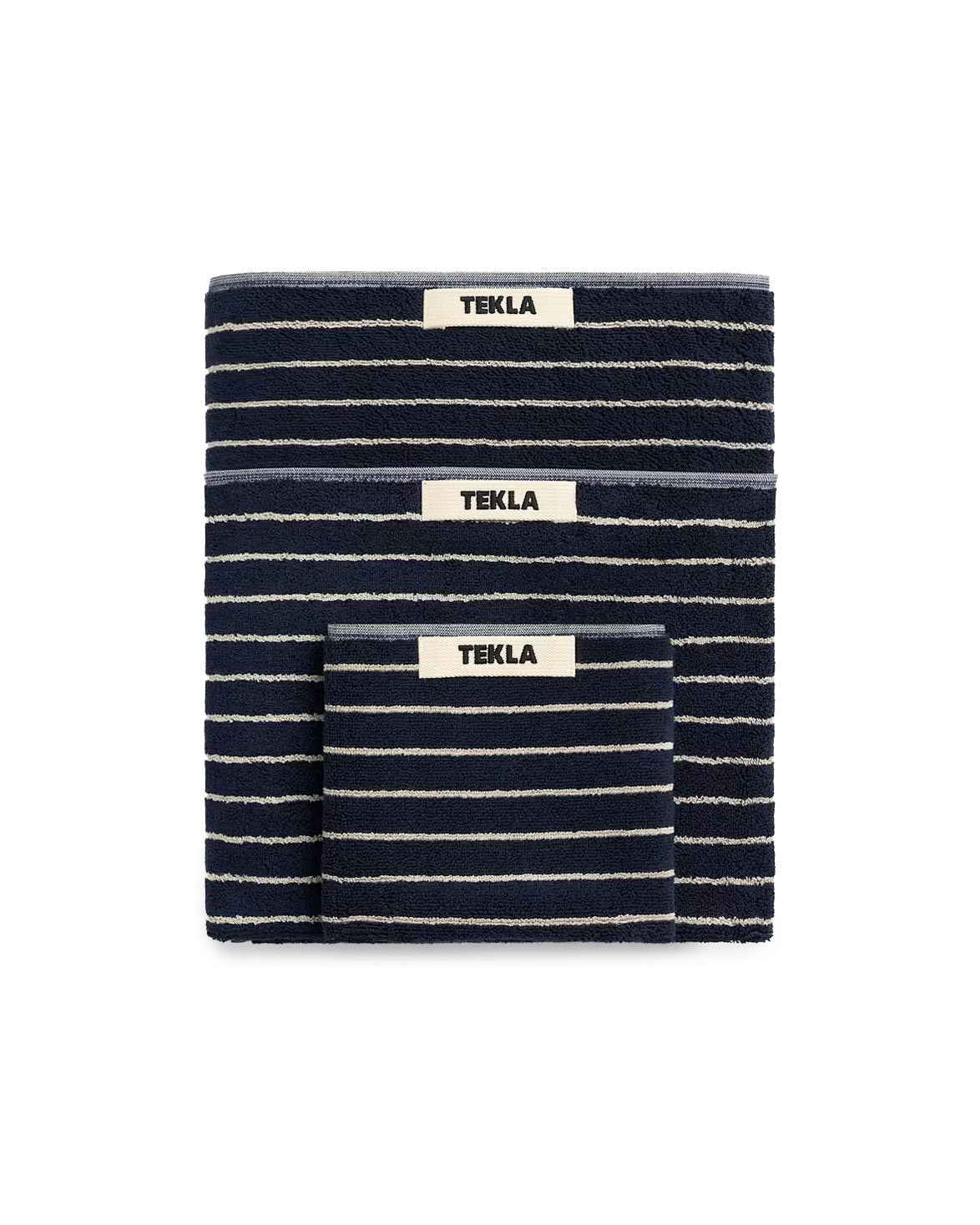
Towels are available in several formats adapted to different uses. Smaller hand towels are mainly used at the washbasin, while bath towels have larger dimensions for showers and baths. Bath sheets are larger still and provide more material to wrap around the body. Smaller guest towels and larger models for use at the pool, beach, or spa are also available. Exact dimensions vary between manufacturers and should therefore be checked for each product.
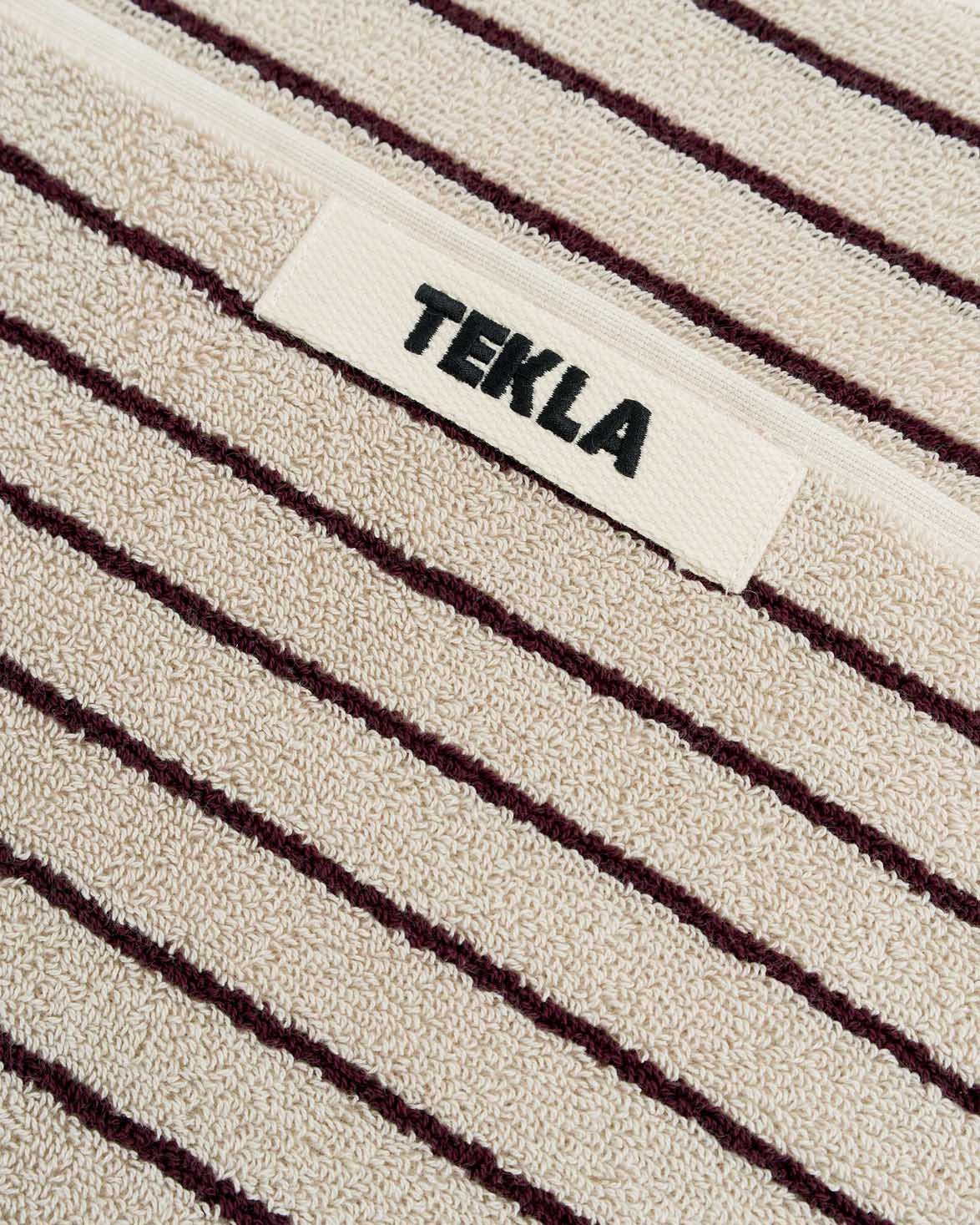
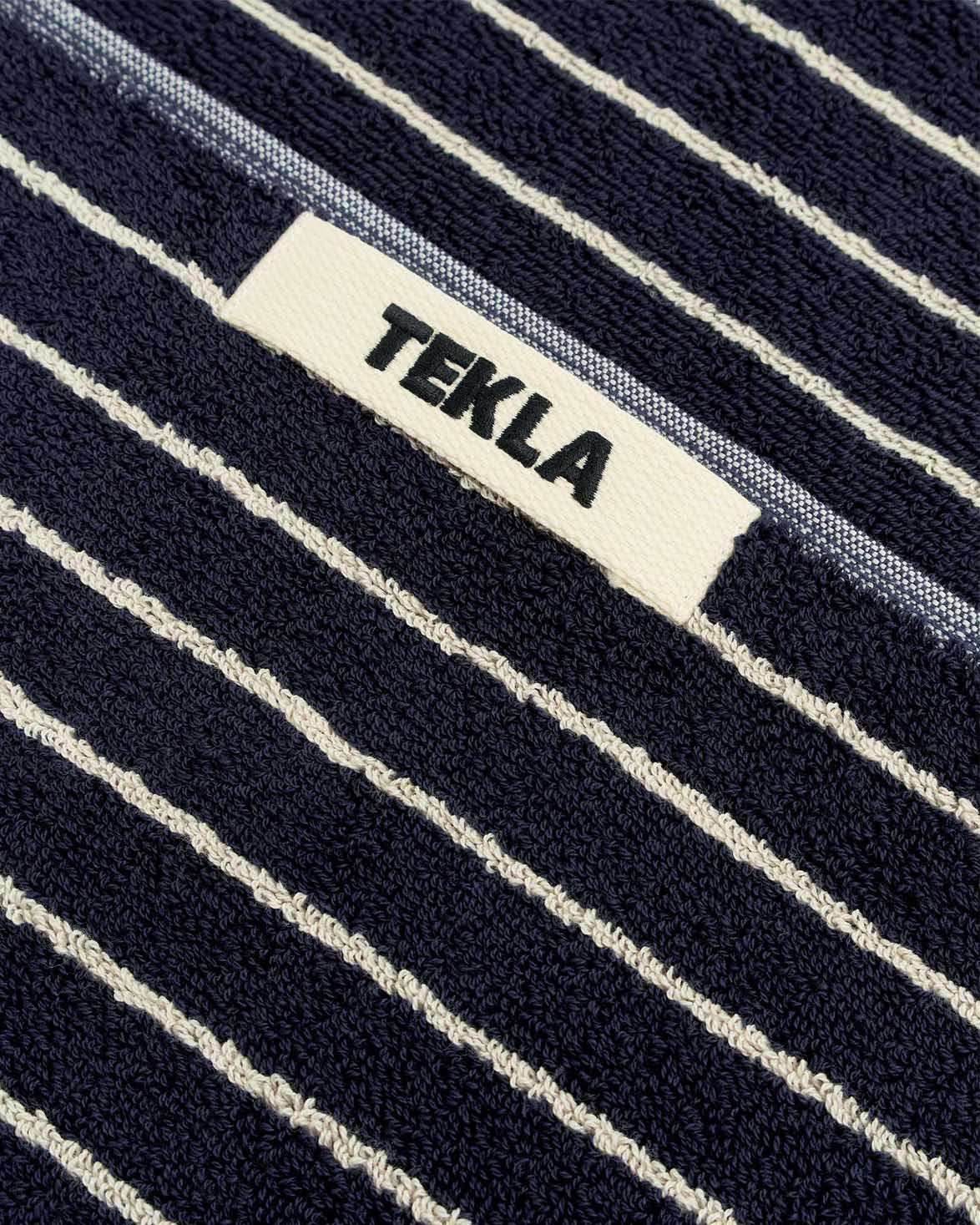
Terry is one of the most common constructions for Towels and is characterised by yarn loops that rise from the fabric's surface. The loops increase the material's total surface area and enable the textile to absorb moisture. Terry can be looped on one or both sides and vary from dense and compact to longer, more voluminous loops. The length of the loops, the properties of the yarn, and the density of the weave affect both the towel's feel and function.
Velour terry has a different surface structure, with the loops on one side cut down to create a softer, velvet-like surface, while the other side usually retains its absorbent terry loops. This construction is found, among other things, on more decorative Towels and beach towels, where a smoother surface can be used for woven or printed motifs, for example.
Plain-weave towels lack terry's raised loops and therefore have a thinner, more compact format. Hamam towels and other lightweight woven models are examples of this construction. Their lower volume makes them easy to fold and pack and usually means they dry faster than heavy terry. They are used both in the bathroom and as lighter alternatives for travel, the beach, and the spa.
Cotton is the most common fibre material in Towels because the fibre has a good ability to absorb moisture and is also suitable for regular washing. Cotton's properties are affected, among other things, by the length of the fibre and how the yarn is spun. Longer fibres can be used to produce smoother yarn, while the yarn's thickness and twist affect the terry's structure and feel.
Different types of cotton are used in towel textiles. Long-staple cotton is often used when a smooth and soft quality is desired, while Egyptian cotton and Pima cotton, for example, denote specific types of cotton with their own fibre characteristics. The designation itself does not determine the towel's overall quality, however, since yarn construction, weaving, and finishing also have great significance.
Linen can be used on its own or blended with cotton in Towels. Linen fibre has a good ability to absorb and release moisture and is used primarily in thinner, plain-weave qualities. The material has a naturally textured surface and usually becomes softer through use and washing. Linen and cotton blends can combine properties from both fibres.
Weight per square metre, often given in grams per square metre, describes how much the textile weighs in relation to its surface area. A higher weight generally indicates a denser or more voluminous towel, while a lower weight produces a lighter construction. Weight per square metre is not, however, a measure of quality on its own. Fibre, yarn, loop construction, and weaving technique also affect the towel's absorbency, feel, and durability.
A lighter towel can be practical when quick drying and a compact format are priorities, while a heavier terry towel provides more volume and a fuller feel. In bathrooms where Towels are used frequently, the balance between absorbency and the ability to dry properly between uses is particularly relevant.
The construction is usually reinforced along the edges with hems to prevent the weave from unravelling. Many Towels also have a woven border where the terry loops are replaced by a denser, smoother weave. The border can be functional or decorative and used to create variation in texture and proportion.
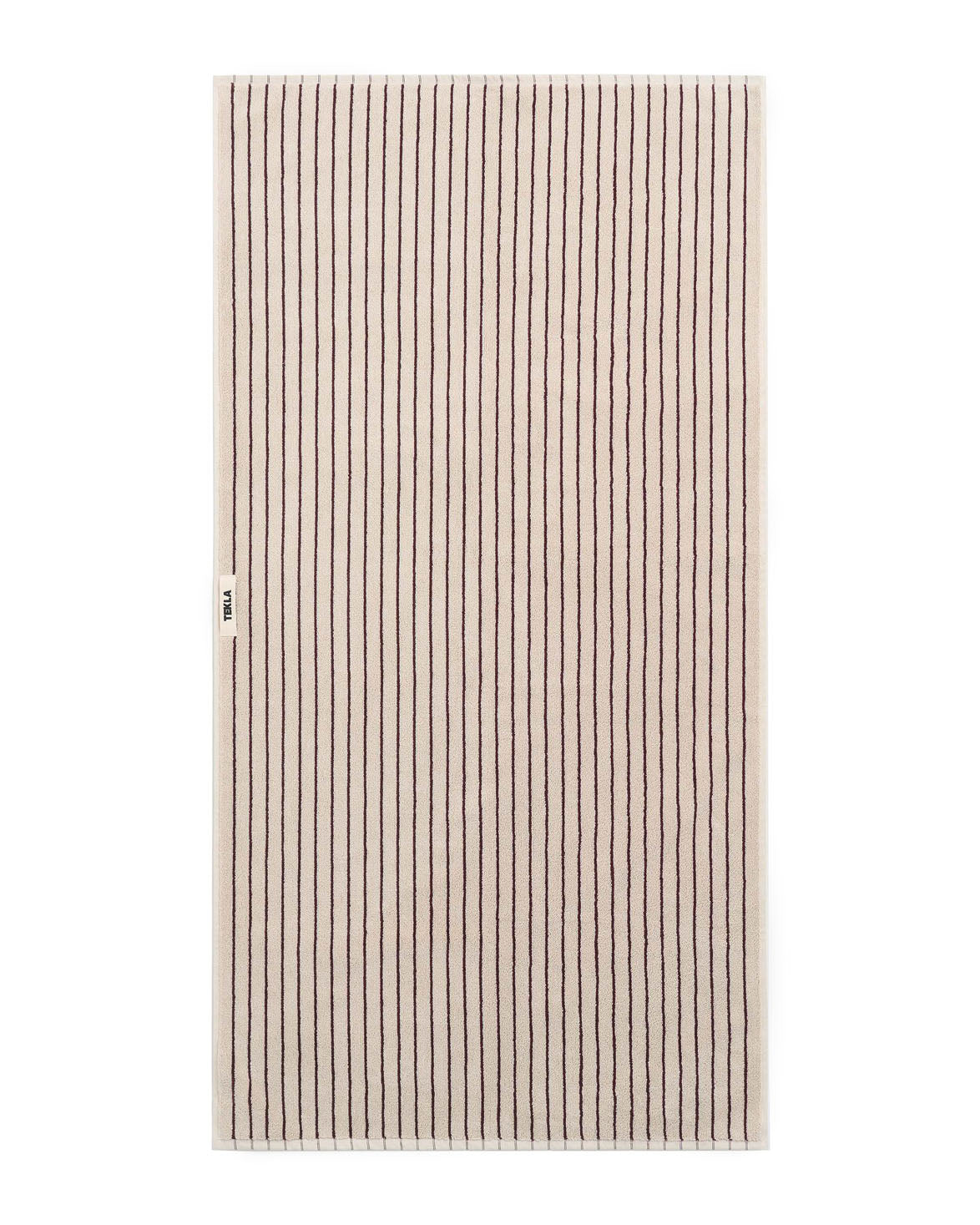
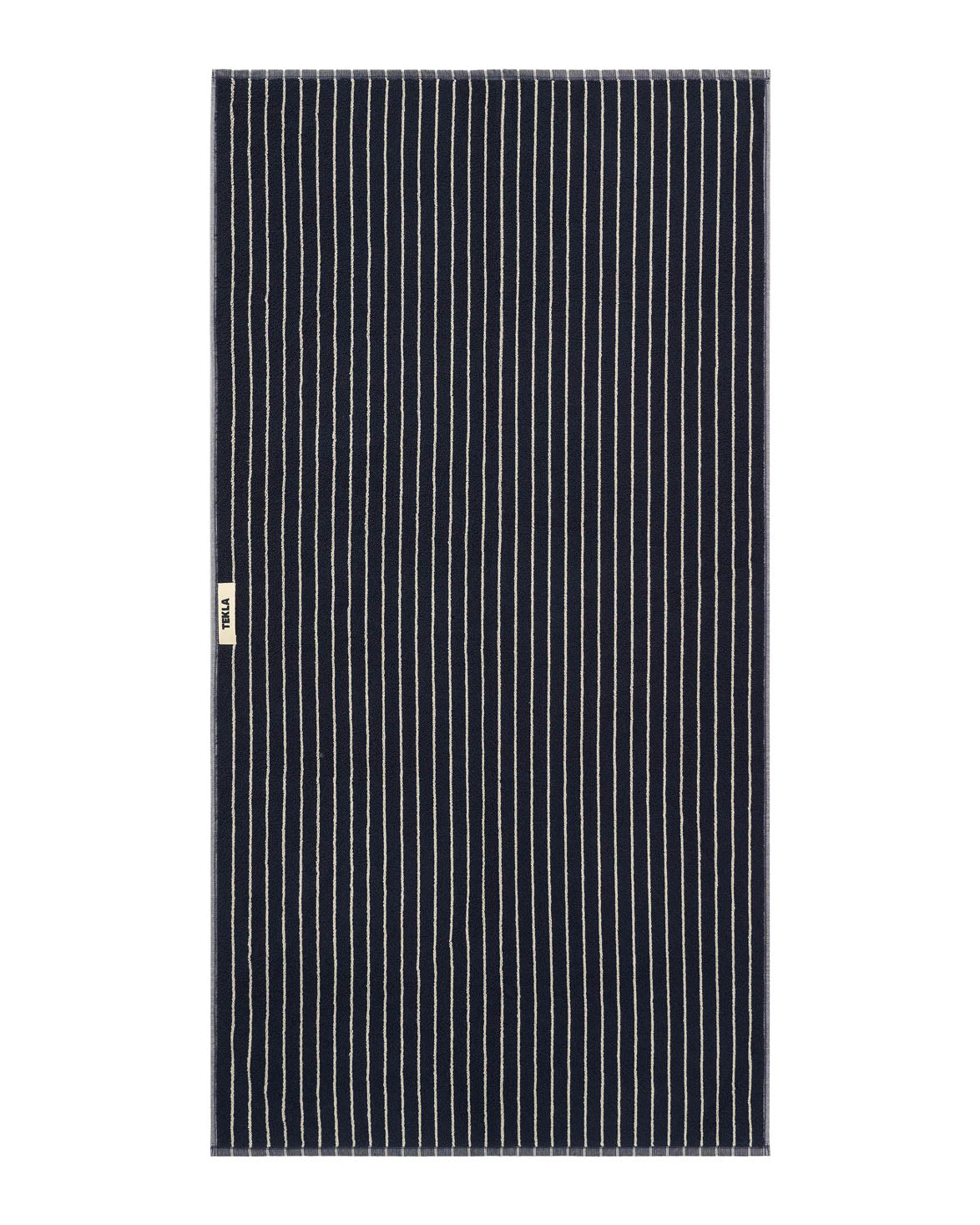
Details such as jacquard-woven patterns, stripes, embroidery, contrasting edges, and textured surfaces can be integrated directly into the textile. Jacquard technique makes it possible to create patterns through the weave itself rather than through subsequent printing. Some models are double-sided, with different textures or motifs on each side.
A hanging loop makes it possible to hang the towel on a hook and can contribute to better air circulation between uses. Regardless of construction, the towel should be allowed to dry properly after use. A towel hanging folded or tightly together with other damp textiles dries more slowly than one hung with plenty of air around it.
Towels are used all year round, but different constructions may suit different environments and uses. Heavier terry is often used in the bathroom, where high absorbency and volume are priorities, while thinner, faster-drying models are practical for travel, the beach, and warmer climates. Larger bath sheets and beach towels also provide a larger surface for the pool, bathing, and outdoor use.
Proper care helps preserve the towel's absorbency, structure, and shape. The washing temperature should always be adapted to the product's material composition and care instructions. Towels should be washed regularly and allowed to dry completely between uses. The washing machine should not be overfilled, as the textiles need room to be washed and rinsed properly.
Excessive use of fabric softener can leave deposits on the fibres and eventually affect terry's absorbency. The amount of detergent should be adapted to the load and water conditions, and detergent residue should be rinsed out thoroughly. Tumble drying can help separate the terry loops and create a softer feel, but the temperature and drying method should always follow the manufacturer's recommendations.
Loose threads or pulled terry loops can occur if the towel catches on jewellery, zips, or other objects, for example. A pulled loop should normally not be pulled further, but can be carefully cut level with the surrounding terry if the product's construction allows it. Towels should be completely dry before being folded and stored to prevent residual moisture in the textile.
Vallgatan 12's selection of Towels includes bathroom textiles in which material, weaving technique, weight per square metre, and size are adapted to different uses. From smaller hand towels and classic cotton terry to generous bath sheets and lighter woven models, the range offers varied formats and textile structures for the bathroom's function and overall look.