






Belts
At Vallgatan 12, there is a carefully curated selection of belts from established and contemporary brands, featuring models that combine practical function with refined materials and details. The range extends from classic leather belts and slim models to wider waist belts, braided constructions, and textile belts, suited to different garments, proportions, and uses.
The original function of a belt is to hold trousers and other garments in place, but it also has an established role as an accessory. A belt can be worn through trouser belt loops or placed at the waist over dresses, blazers, knitwear, and outerwear, for example. Width, length, and placement affect both fit and proportions, making it important to choose a belt according to the garment’s construction and how it is intended to be worn.
Classic leather belts are usually medium-width and designed to be worn through trouser belt loops. Slimmer belts create a more discreet look and also work with garments featuring smaller belt loops, while wider models have a stronger presence and can be used to define the waist. Waist belts are often designed to be worn higher on the body and may therefore have different proportions from belts intended for trousers. Braided belts and models without fixed holes can in some cases offer greater flexibility when adjusting the fit.
The size of a belt is usually stated according to its length, but the measurement method may vary between brands. For many models, the size corresponds to the distance from the buckle attachment to the middle hole, allowing the fit to be adjusted in either direction. A belt intended to be worn at the waist may require a different size from one positioned lower on the hips. The product’s specific size guide should therefore be used to determine the correct length.
Leather is one of the most common materials for belts, thanks to its combination of shape retention, durability, and ability to develop with use. Full-grain leather retains the natural surface of the leather and can develop a patina over time, while other leather qualities may be sanded, embossed, coated, or surface-treated to create different textures and properties. Suede is characterized by its brushed surface and provides a softer texture, but is generally more sensitive to moisture and dirt. Textile belts can be made from materials such as cotton, canvas, nylon, or braided fibers, offering different properties in terms of flexibility, weight, and durability.
The construction of a belt affects both its durability and how it takes shape with use. Leather belts can consist of a single layer of leather or be built from several joined layers, sometimes with reinforcement between the outer and inner surfaces. The edges may be left raw, polished, dyed, or stitched, depending on the construction and desired look. Textile models may be woven or braided and are often reinforced at the ends and attachment points, where the strain is greatest.
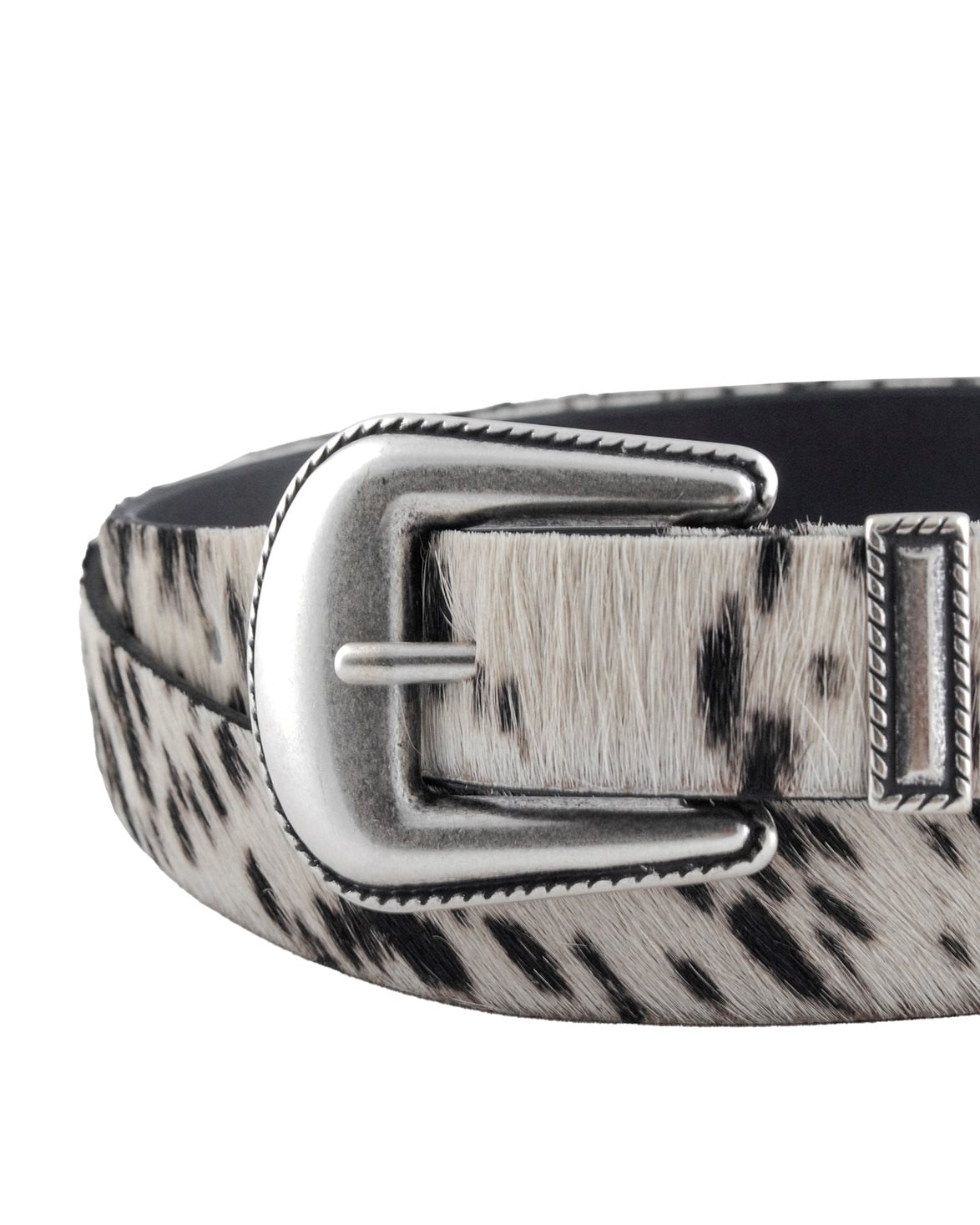
The buckle is a central part of a belt’s construction and comes in several designs. Classic pin buckles fasten through holes in the belt, while ring buckles, hooks, and other locking mechanisms provide alternative ways to adjust the fit. Hardware is often made of metal and may have a polished, brushed, or treated surface. Other details may include embossed logos, contrast stitching, rivets, decorative perforations, and specially designed belt loops. On more minimalist models, the focus is instead on the quality of the leather, the proportions, and the construction of the buckle.
Belts are largely seasonless, but materials and styling can vary throughout the year. Classic leather belts work across several seasons, while lighter textile and braided models are often worn with spring and summer wardrobes. Heavier leather, suede, and wider models can similarly be combined with heavier materials and layers during autumn and winter. The use of a belt is therefore determined more by its material, proportions, and the garments it is paired with than by a specific season.
Proper care helps a belt retain its shape, surface, and function over time. Leather should be kept dry and, when necessary, cleaned and treated with products suited to the specific type of leather. Suede should be gently brushed with a suitable suede brush and protected from heavy moisture. Textile belts should be cleaned according to the product’s specific care instructions. A belt should not be tightly folded or stored under pressure, as this can create permanent creases and affect the material’s shape. Metal hardware can be wiped with a soft, dry cloth, and direct contact with perfume, chemicals, and heavy moisture should be avoided.
Vallgatan 12’s selection of belts includes models where materials, proportions, and construction meet different functions and ways of wearing the accessory. From classic leather belts and slim silhouettes to wider waist belts and textile constructions, the range offers models for different garments, fits, and looks.