







Glassware
At Vallgatan 12, a curated selection of glassware brings together form, proportion, material, and craftsmanship in harmony with the other elements of the table setting. The range includes drinking glasses, tumbler glasses, wine glasses, champagne glasses, highball glasses, cocktail glasses, and other specialized models. From pared-back everyday glasses to hand-blown and more sculptural forms, there are models for different drinks, table settings, and uses.
Drinking glasses and tumbler glasses are among the most versatile models and can be used for water, juice, soft drinks, cocktails, and other beverages. Lower tumbler glasses, often called lowball or old fashioned glasses, have a wider and more stable construction and are used, among other things, for drinks served with ice. Highball glasses are taller and narrower and are suitable for long drinks, cocktails, and larger quantities of cold beverages. The glass's height, diameter, and volume affect both how the drink is served and how the glass feels in the hand.
Wine glasses are designed with different bowl, foot, and stem shapes depending on their intended use. Red wine glasses usually have a larger and more spacious bowl, while white wine glasses are often somewhat smaller. Wider bowls can give the wine greater contact with the air, while the shape and opening of the glass affect how aroma and flavor are perceived. There are also universal glasses with a more balanced shape that can be used for several different types of wine. The stem makes it possible to hold the glass without warming the drink with your hand and also contributes to the glass's proportions and stability.
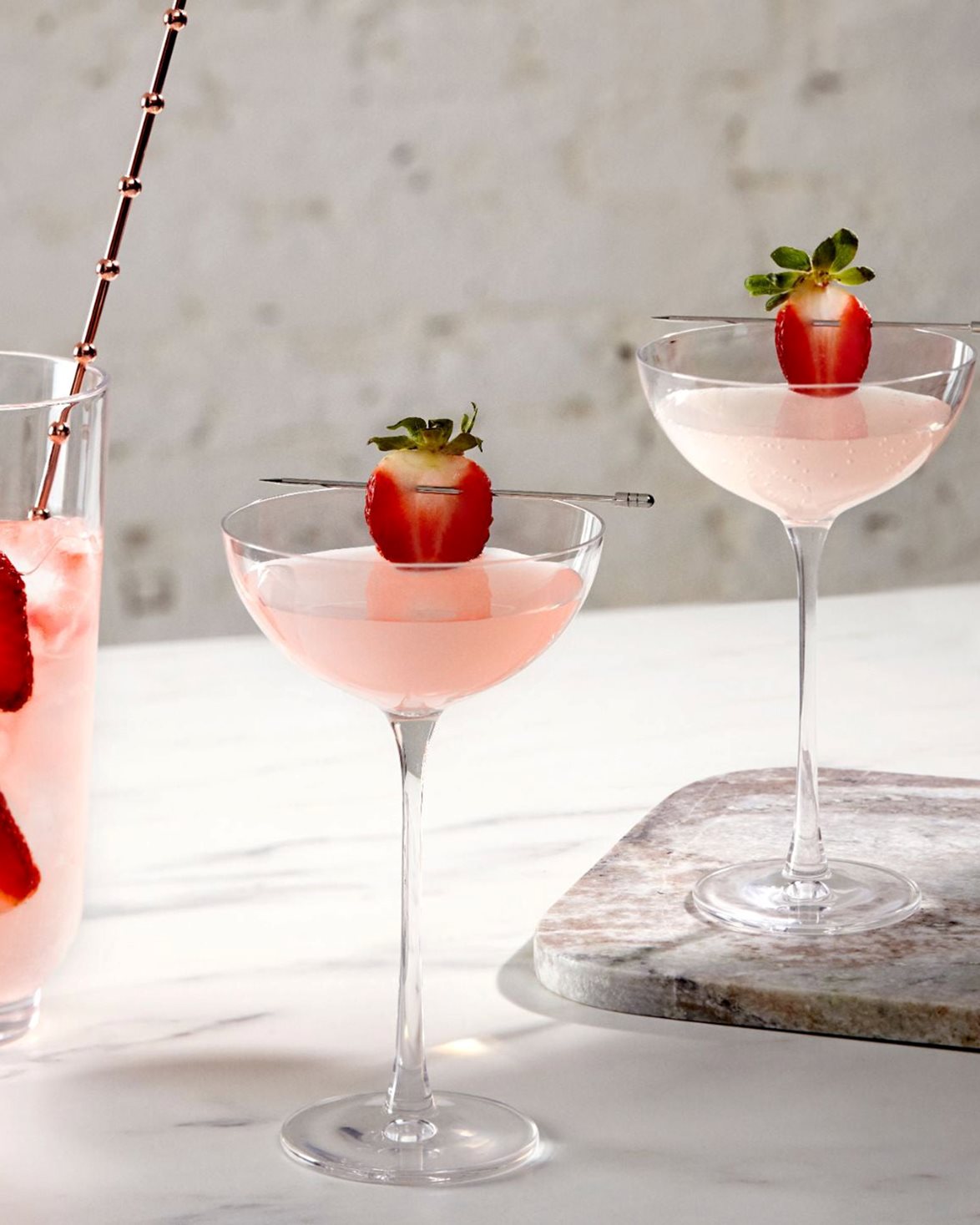
Champagne glasses are primarily available as flutes and coupes. The flute has a tall and narrow construction that helps preserve the drink's bubbles, while the coupe has a wider and shallower bowl. Cocktail glasses come in several forms, including martini glasses, margarita glasses, coupe glasses, and various types of highball and tumbler glasses. The shape is adapted to the drink's volume, serving method, and amount of ice, meaning that the same type of glass can serve different functions depending on its construction.
The glass's material and manufacturing method affect its weight, transparency, durability, and feel. Soda-lime glass is used in many everyday glasses and can be relatively durable, while crystal glass is often characterized by a thinner construction, high transparency, and more pronounced light play. Hand-blown glasses are made individually and may therefore display minor variations in shape, thickness, and surface. Recycled glass is also available and can have subtle variations in color and texture. Borosilicate glass is used in some constructions where greater temperature resistance is relevant.
Form, color, and surface treatment create extensive variation within the category. Clear glass allows the color and transparency of the drink to become part of the table setting, while colored, frosted, or textured glass changes the reflection of light and gives the glass a more prominent role. Ribbed, bubbled, and hand-finished surfaces appear alongside completely smooth models. The shape of the foot, the length of the stem, and the proportions of the bowl also affect how the glass relates to plates, cutlery, and the other elements of the table setting. Hand-blown and more sculptural models can also function as decorative objects when not in use.
Glasses can be combined within a table setting without every piece needing to be identical. Tumbler glasses can be used together with wine glasses and champagne glasses, while different heights and shapes create variation between place settings. A consistent material or shared color palette can create cohesion, while contrasting shapes and textures can create a more varied table setting. Smaller glasses can also be used for aperitifs, desserts, or smaller servings, while larger models are suitable for water, cocktails, and other drinks with greater volume.
Proper care helps preserve the glass's transparency, surface, and construction over time. Many modern drinking glasses and some crystal glasses are dishwasher-safe, but this should always be checked against the manufacturer's recommendations. Thin wine glasses, hand-blown models, and glasses with delicate decorations may need to be washed by hand. When washing by hand, the glass should be held by its most stable part and not twisted by holding the foot and bowl at the same time, as thin stems and joints can be sensitive to stress. Glass should not be exposed to sudden temperature changes unless the material is designed for this, and handmade or decorated models should be handled with particular care.
Vallgatan 12's selection of glassware includes models where function, material, proportion, and craftsmanship work together with the table setting. From classic tumbler and drinking glasses to wine glasses, champagne glasses, highball glasses, and cocktail glasses, there are options for different drinks and serving occasions. The range moves between pared-back everyday models and more expressive hand-blown or sculptural forms, where the glass's transparency, color, texture, and construction become an integral part of the table setting.