


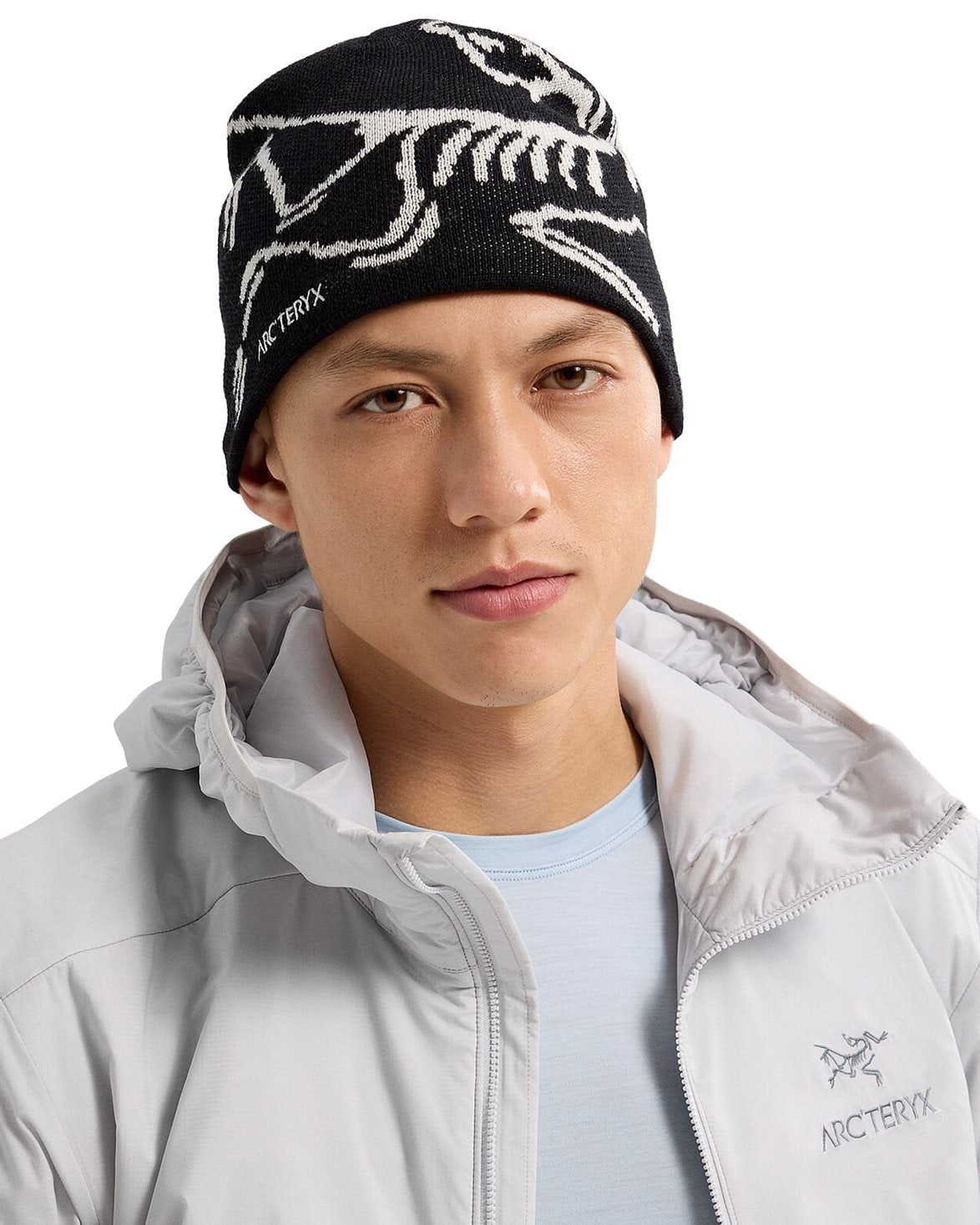


Beanies
At Vallgatan 12, there is a carefully curated selection of beanies for warmth, functionality, and as part of the overall outfit. The range includes everything from classic rib-knit beanies and fine-knit models to heavier beanies, folded silhouettes, and models with a more relaxed fit. Material, knitting, and construction affect warmth and comfort as well as the beanie's shape and expression.
The beanie primarily serves an insulating function and is used to reduce heat loss from the head and ears during the colder periods of the year. Thinner knitted models work in milder temperatures and transitional seasons, while denser and heavier constructions provide greater insulation in winter. Beanies are also used as an integrated part of the wardrobe, where material, proportions, and fit can change the overall impression.
One of the most common models is the beanie, a knitted hat available in several lengths and fits. Models with a folded edge provide an extra layer of material around the ears, while beanies without a fold often have a cleaner and more close-fitting silhouette. Shorter models sit higher on the head, while longer constructions can create a softer and more relaxed shape. The fit varies from close-fitting and elastic to roomier models depending on the knitting, material, and design.
Wool is one of the most common materials in beanies thanks to its naturally temperature-regulating and insulating properties. Merino wool has fine fibers that provide a soft feel and is often used in thinner or close-fitting models. Lambswool and other wool qualities can provide a fuller structure and high warmth, while cashmere is characterized by very fine fibers, low weight, and softness. Cotton is used primarily in lighter beanies and provides a soft material with good breathability. Synthetic fibers such as polyamide, polyester, and acrylic may be used separately or in blends to affect durability, elasticity, shape retention, and drying time.
Construction has a major impact on the beanie's properties. Rib knitting creates an elastic structure that allows the beanie to adapt to the shape of the head, while denser jersey-knit constructions can create a more compact appearance. The thickness and density of the knitting also affect how well the material insulates. Double layers, lined constructions, and folded edges provide additional material around the head and can therefore contribute to increased warmth.
Details vary between different models and can be both functional and visual. Folded edges make it possible to adjust the beanie's length and the amount of material around the ears, while logos, embroidery, branded patches, and contrasting knit structures can be part of the design. On some models, different yarns or materials are combined to create variation in texture, elasticity, and feel.
Beanies are primarily used during autumn and winter, but the material and construction determine how far into the seasons a model can be used. Thin models in merino wool, cotton, or finer knits can be worn on cooler days during much of the year, while coarser wool qualities, double layers, and denser knits are suited to lower temperatures. When choosing a beanie, it is therefore relevant to consider both the insulating properties of the material and the thickness of the construction.
Proper care helps the beanie retain its fit, structure, and material properties over time. Wool, merino wool, and cashmere should be washed sparingly and according to the product's specific care instructions, usually using a gentle wool cycle or hand washing and a detergent suitable for wool. Knitted beanies should normally be laid flat to dry to reduce the risk of the material stretching or losing its shape. Pilling can occur naturally on wool and other soft fibers through friction and can be carefully removed with a de-pilling comb or a tool suited to the material. Between uses, wool beanies can preferably be aired instead of being washed frequently.
Vallgatan 12's selection of beanies combines functional materials with different knits, proportions, and fits. From thin and close-fitting models for the transitional season to heavier wool beanies for winter use, the range includes options suited to different temperatures, uses, and expressions.